

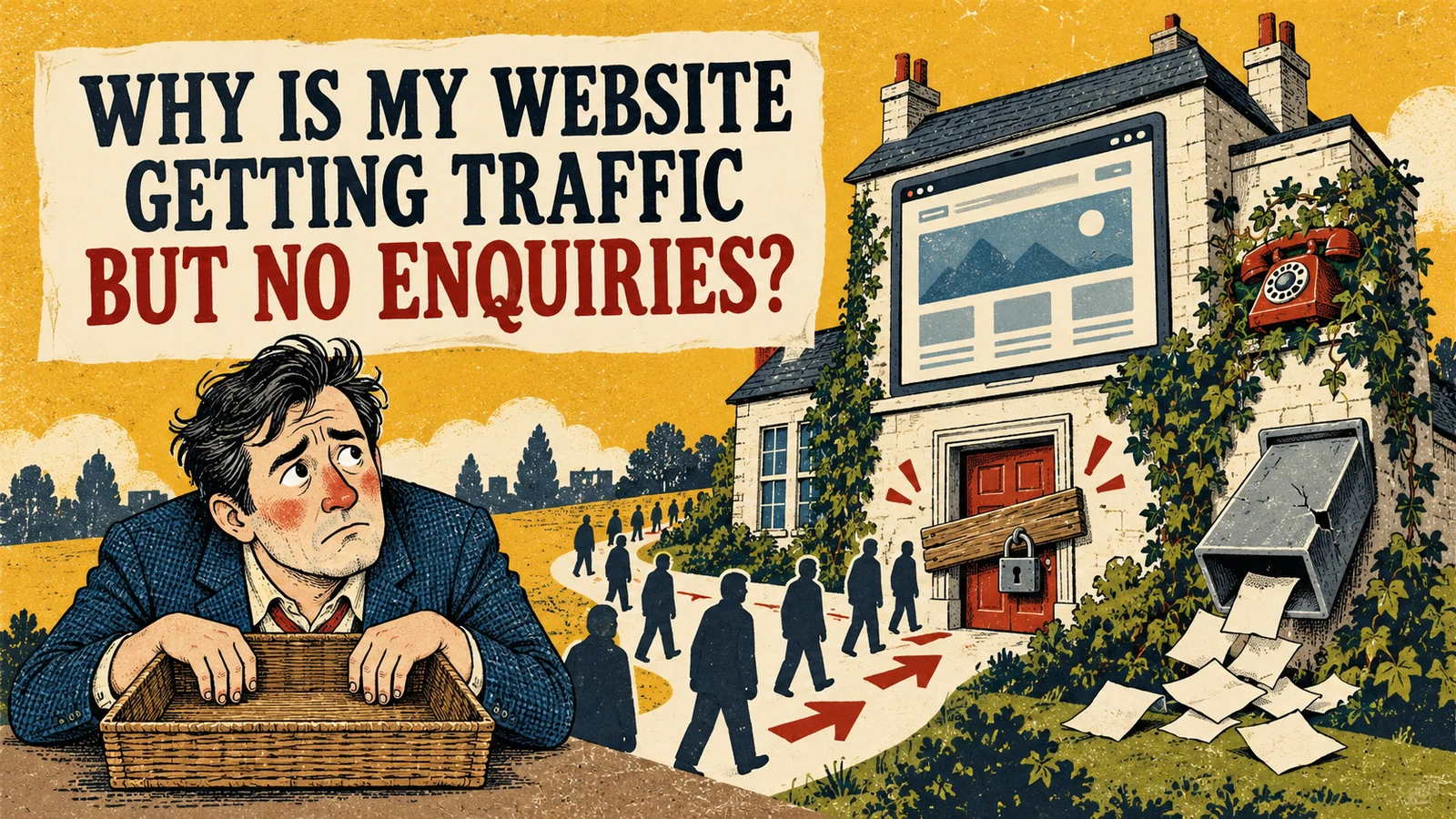
Traffic is not the same as commercial intent.
A website can have thousands of visitors and still generate very little business. That does not automatically mean the SEO or advertising is failing. It may mean the traffic is wrong, the page is weak, the conversion path is broken, or the enquiries are being lost after they arrive.
The fastest way to diagnose the problem is to separate the journey into three stages:
1. Traffic generation – are the right people arriving?
2. Website conversion – can those people understand, trust and contact you?
3. Sales or booking process – what happens after they call or submit a form?
Do not change all three at once. Find the break.
1. The search intent is wrong
A page can rank for an informational query and receive substantial traffic from people who were never likely to buy.
For example, an article answering “What is shockwave therapy?” may attract research traffic. A service page targeting “shockwave therapy near me” is closer to a booking decision.
Traffic reports should therefore be read by landing page and query, not just total sessions.
2. The traffic source is wrong
Viral social traffic can create large visitor numbers with little buying intent. Display advertising can do the same. Even paid search can attract poor traffic if match types, keywords or locations are loose.
Ask which channel produces enquiries, not which channel produces the biggest graph.
3. The page does not immediately explain what you do
Visitors should not need to decode a clever headline. A commercial page needs to make the service, location and next step obvious.
Within a few seconds, a user should be able to answer: Is this for me? Do you work in my area? Can I trust you? What should I do next?
4. Calls to action are weak or hidden
“Learn more” is not always enough. If the commercial action is booking, requesting a quote or calling, make it visible.
Use one primary next step and repeat it naturally on longer pages. On mobile, test whether the phone number is easy to tap and whether the form is usable without zooming.
5. The website is slow
Speed isn’t the only reason people leave, but delays create friction. Google’s Core Web Vitals focus on loading, interactivity and visual stability, with recommended thresholds for good user experience.
Large images, excessive scripts, poorly configured themes and third-party widgets can all hurt performance. Test real pages, not just the homepage.
6. Mobile usability is poor
A site can look excellent on a desktop monitor and be frustrating on the phone where most prospects actually browse.
Check font size, tap targets, sticky banners, menus, forms, cookie notices, booking widgets and whether important information is pushed too far down the page.
7. Navigation is confusing
If a visitor cannot find the correct service or location page, they leave. Organise the website around how customers think, not the company’s internal department structure.
Every important service should have a clear destination. Avoid sending all traffic to one generic page and expecting the user to work out the rest.
8. Trust is too weak
Prospects look for reassurance: reviews, real people, credentials, case studies, clear contact details, real photographs, policies, recognisable locations and evidence that the company is active.
The stronger the risk or price of the purchase, the more trust information matters.
9. Pricing uncertainty is creating hesitation
Not every business should publish a fixed price. But hiding all indication of cost can reduce enquiries, particularly when competitors are transparent.
If exact pricing is impossible, explain starting prices, typical ranges, or what determines the quote. Removing uncertainty can improve lead quality and volume.
10. Service pages are too thin
A page with 150 words, a stock photo and a contact button rarely answers the questions a serious buyer has.
Strong service pages explain who the service is for, the problem it solves, how the process works, timescales, cost expectations, proof, FAQs and the next step.
11. Forms are too long – or broken
Test every form yourself. Then test it on mobile. Check that notifications arrive, thank-you pages load and tracking fires.
If the first enquiry form asks for fifteen fields, consider whether you genuinely need all of them before someone has even spoken to you.
12. Phone calls are not being answered properly
This is one of the most overlooked causes of “marketing not working”. Advertising can generate a good enquiry that never becomes a booking because the phone rings out, the caller waits too long, receives the wrong information, or isn’t followed up.
If calls matter, use call tracking and, where lawful and appropriate, quality review processes so marketing data connects to the real customer experience.
Google Ads offers phone-call conversion tracking specifically so advertisers can understand which campaigns and keywords drive calls.
13. Tracking is failing
A website can appear to generate no enquiries because the measurement is broken. Cookie-consent changes, tag errors, site redesigns and form plugins can all interrupt conversion tracking.
Google Ads defines conversions as valuable actions such as sales, leads or phone calls. Check that your chosen actions reflect real business value and that the tags still fire.
14. Paid traffic quality is low
If Google Ads clicks are high but leads are poor, inspect the search-term report. Look for irrelevant intents, locations, job seekers, research queries or low-value variations.
Add negative keywords, tighten locations and match the ad copy more closely to the service.
Is the problem traffic, website or sales process?
Use this simple diagnosis:
Traffic problem
Signs include irrelevant queries, high volumes to low-intent blogs, poor geographic match and lots of clicks from people who could never buy.
Website problem
Signs include relevant traffic but low form/call engagement, high mobile abandonment, weak service pages, poor trust, broken forms or slow pages.
Sales/booking problem
Signs include healthy enquiry volume but falling sales, low call answer rates, weak follow-up or large differences between marketing conversions and actual bookings.
This distinction matters because each problem needs a different solution.
A 15-minute audit checklist
Open the top five landing pages on a phone.
Check page speed and Core Web Vitals.
Submit every important form.
Call every tracked phone number.
Review the top organic queries in Search Console.
Review paid-search terms, not just keywords.
Check conversion tags.
Compare enquiries with CRM or booking data.
Read recent calls or sales notes for patterns.
Compare your pricing and trust information with the businesses ranking beside you.
Example: traffic rises but leads fall
Suppose organic traffic rises 25% because several informational blogs rank well, while visits to the main service pages remain flat. Total traffic looks healthier, but commercial opportunity has not really changed.
Now suppose service-page traffic rises too, forms are working, and calls are tracked – but bookings fall. The investigation should move beyond marketing into call handling and follow-up.
That is why total traffic on its own is a weak KPI.
Request a marketing review
If your website has visitors but is not turning enough of them into enquiries, request a marketing review from Spiders & Milk. We can help identify whether the bottleneck is traffic quality, the website itself, tracking or the later sales process.
Frequently asked questions
Why do I have website traffic but no leads?
Common causes include low-intent traffic, weak calls to action, slow or poor mobile pages, insufficient trust, unclear pricing, broken forms, unanswered calls or faulty conversion tracking.
How can I tell whether SEO traffic is useful?
Look at the queries and landing pages generating traffic, then connect them with calls, forms and sales outcomes. Total organic sessions alone do not show commercial value.
Can phone answering affect marketing performance?
Yes. A good marketing campaign can still produce poor sales if calls are missed, handled badly or not followed up.
What should I test first?
Check the top landing pages on mobile, test forms and phone numbers, verify conversion tracking, review search terms and compare enquiry data with actual bookings or sales.


Leave A Comment